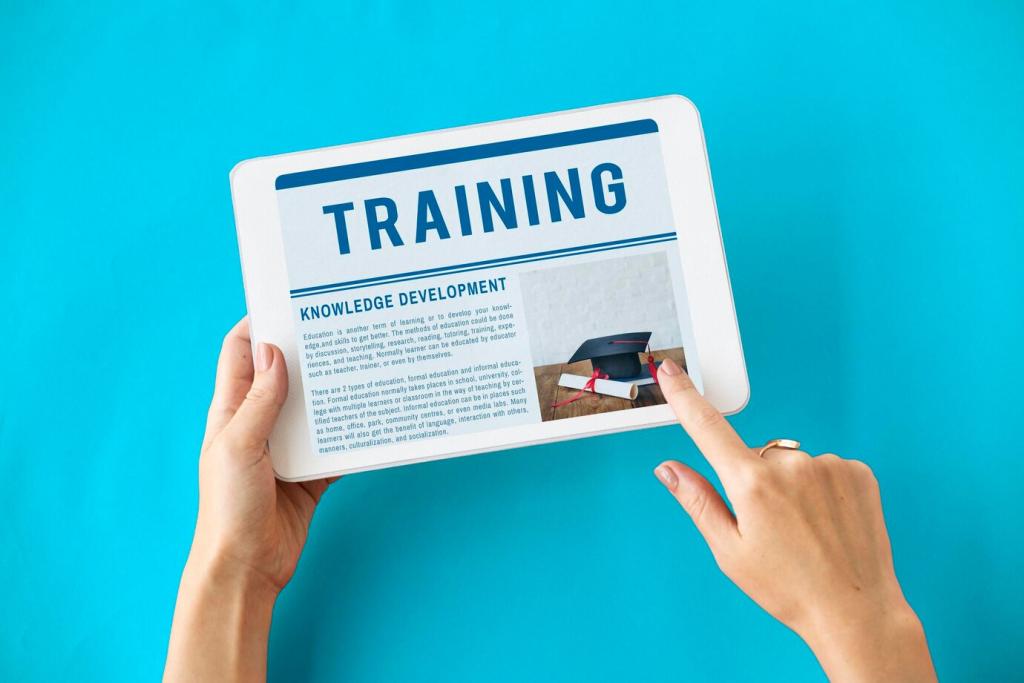
Educational Innovation for the Future Workforce

Chosen theme: Educational Innovation for the Future Workforce. Step into a welcoming, forward-looking space where we explore how bold ideas, smarter tools, and human-centered design are reshaping learning for tomorrow’s jobs. Stay curious, share your voice, and subscribe to follow every breakthrough as it happens.

Why Educational Innovation Matters Now

From Degrees to Capabilities

Employers increasingly value capabilities—problem solving, collaboration, adaptability—over titles alone. Educational innovation reframes classrooms as launchpads for real challenges, where students practice making decisions, navigating ambiguity, and communicating effectively. Share a skill your team relies on that you rarely saw emphasized in school.

Economic Mobility Through Learning

When curricula align with industry needs, education becomes a powerful engine of mobility. Innovative pathways, apprenticeships, and stackable credentials help learners pivot into higher-wage roles quickly. Comment with one local program you admire that helps people reskill without sacrificing income.

Resilience in a Dynamic Job Market

Automation and digitalization reshape roles, but human judgment remains essential. Innovative learning builds resilience through continuous upskilling and reflective practice. How does your organization keep skills fresh? Tell us, and subscribe for upcoming toolkits on planning personal learning roadmaps.

Designing Curriculum for Future-Ready Skills

Instead of treating subjects as endpoints, innovative courses map each project to explicit skills and artifacts. Learners build portfolios that show evidence of growth, not just test scores. What skills would you spotlight in your syllabus next semester? Add your ideas and inspire others.

Designing Curriculum for Future-Ready Skills

Real problems ignore departmental boundaries. Capstone challenges—like designing sustainable housing or improving local transit—invite engineering, policy, design, and communication to interweave. Students practice negotiating trade-offs and advocating for stakeholders. Share a challenge you’d set for your students this year.


Technology-Enhanced Learning that Stays Human

From drafting feedback to generating practice problems, AI can lighten cognitive load and open space for deeper mentoring. The magic happens when teachers set guardrails and students learn to question outputs. How do you coach learners to use AI responsibly? Join the discussion.

Technology-Enhanced Learning that Stays Human

AR and VR simulations let learners rehearse complex tasks—from welding to clinical triage—without real-world risk. Safe failure becomes a teacher, revealing patterns and decisions worth revisiting. Share a simulation you’d love to see in your field, and why it matters.

Work-Based Learning and Industry Partnerships

Invite employers to pitch authentic problems, then mentor student teams through discovery, prototyping, and reflection. Students gain feedback loops that feel like the workplace, not a worksheet. Which companies in your region could sponsor challenges? Tag them and start a conversation.

Work-Based Learning and Industry Partnerships

Short, scoped engagements let learners test career hypotheses before committing. They build social capital while producing tangible deliverables. If your organization offers micro-internships, share the most impactful task you gave a student and what you learned as a mentor.

Assessing What Truly Matters

Portfolios collect artifacts across time—drafts, reflections, peer feedback—that reveal how thinking evolves. Employers can see work in context, not just a final score. What artifact from your learning would you proudly show a hiring manager? Share it and tell us why.
Multiple means of engagement, representation, and action help diverse learners thrive. Captioned content, flexible pacing, and choice in demonstrations of mastery level the field. What UDL tweak changed outcomes in your setting? Tell us so others can try it too.

Stories of Transformation

Mina, a physics teacher, replaced unit tests with a clean-energy design sprint. Students interviewed local businesses, built prototypes, and defended cost models. Engagement soared, and one team earned a summer internship. What small experiment could you start next week?

Stories of Transformation

Jairo, a logistics supervisor, used evening microcourses in data analytics to automate reporting at work. His portfolio impressed leadership, leading to a new role. Which micro-skill would accelerate your trajectory? Declare it publicly here and commit to a first step.
Zaniravalexono
Privacy Overview

This website uses cookies so that we can provide you with the best user experience possible. Cookie information is stored in your browser and performs functions such as recognising you when you return to our website and helping our team to understand which sections of the website you find most interesting and useful.